




Customer Spotlight - Powering Solar Racing at Georgia Tech
Georgia Tech Solar Racing leverages the precision and automation of the new SLx Series to optimize their latest solar-powered vehicles for the 2,000-mile American Solar Challenge.
At Magna-Power, we believe that the next generation of power electronics starts with the next generation of engineers. For years, we have watched the Georgia Tech Solar Racing (GTSR) team push the boundaries of what is possible in sustainable transportation, moving from ambitious designs to podium finishes on the national stage.
When GTSR approached us about their latest vehicle, the four-occupant SR-4, and their upcoming single-occupant SR-5, we saw an opportunity to support their mission with our latest technology. While the team has long relied on our popular SL Series power supplies, their complex testing requirements for custom Maximum Power Point Trackers (MPPTs) and high-density battery modules demanded the enhanced precision and connectivity of our newest generation: the SLx Series.
In the following article, the GTSR Electrical Team shares a technical deep dive into how they integrate the SLx Series into their workflow. From utilizing CANopen for automated battery characterization to leveraging remote sensing for high-efficiency converter testing, the students provide an inside look at how they are using Magna-Power hardware to prepare for the 2,000-mile American Solar Challenge.
We are proud to play a small part in their journey and are excited to showcase their engineering rigor below.
Meet Georgia Tech Solar Racing
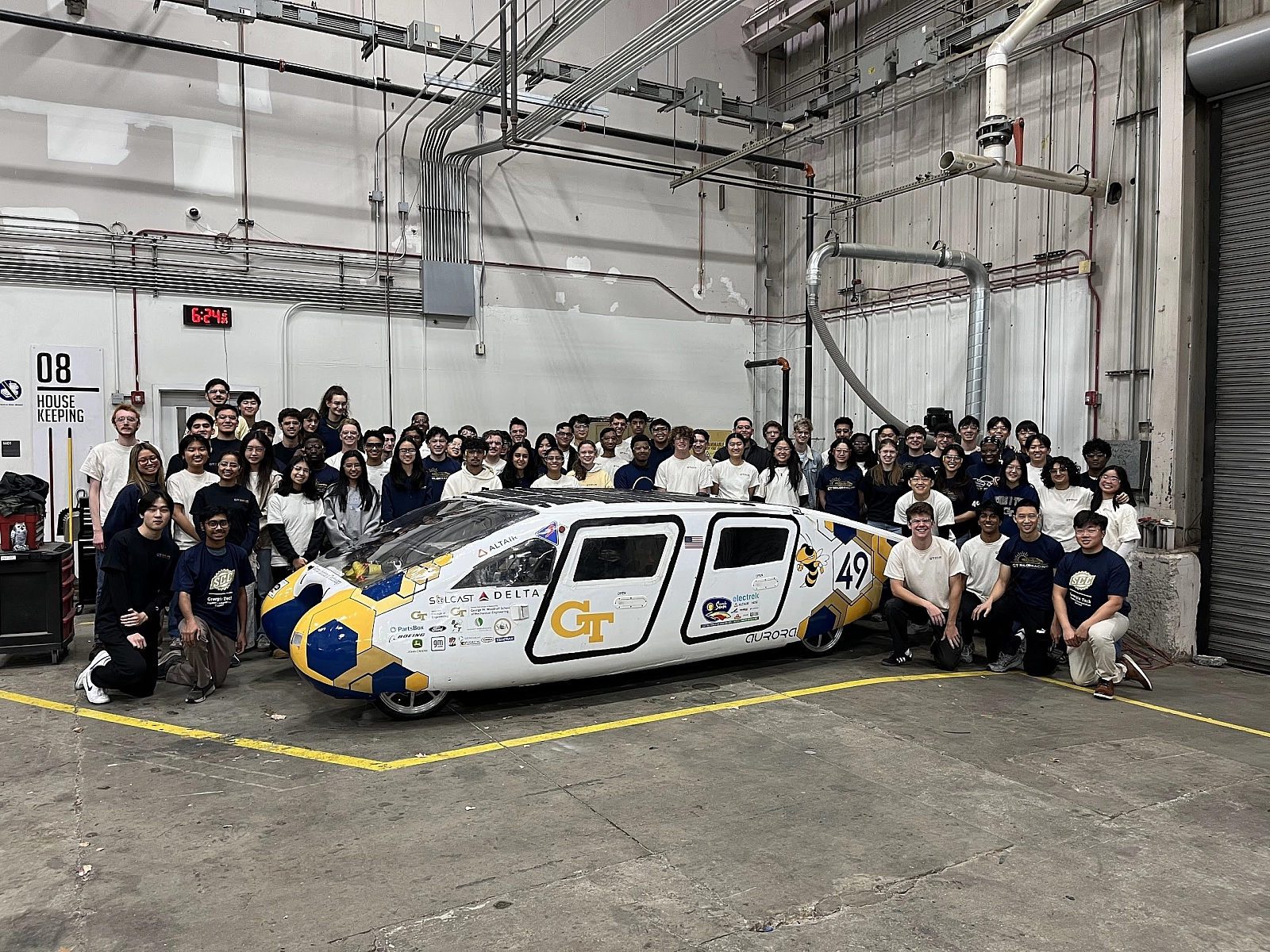
Georgia Tech Solar Racing (GTSR) is a student-run team of over 150 members who design and build solar-powered race cars for both track and cross-country competitions. The team continually pushes the boundaries of innovation while providing students with meaningful, hands-on engineering experiences.
Our current vehicle, SR-4, is a multi-occupant solar car and the first four-person solar vehicle built in North America to compete in a race. SR-4 placed third in the Multi-Occupant Vehicle (MOV) Division at the track-style 2025 Formula Sun Grand Prix, and the team is now preparing for the 2026 American Solar Challenge, a cross-country race covering over 2,000 miles. We are also nearing the end of the design cycle and transitioning into manufacturing and testing for our next vehicle, SR-5, a single-occupant solar car designed to push the limits of efficiency and reliability in the Single-Occupant Vehicle (SOV) division.
Testing Infrastructure: From SL Series to SLx Series
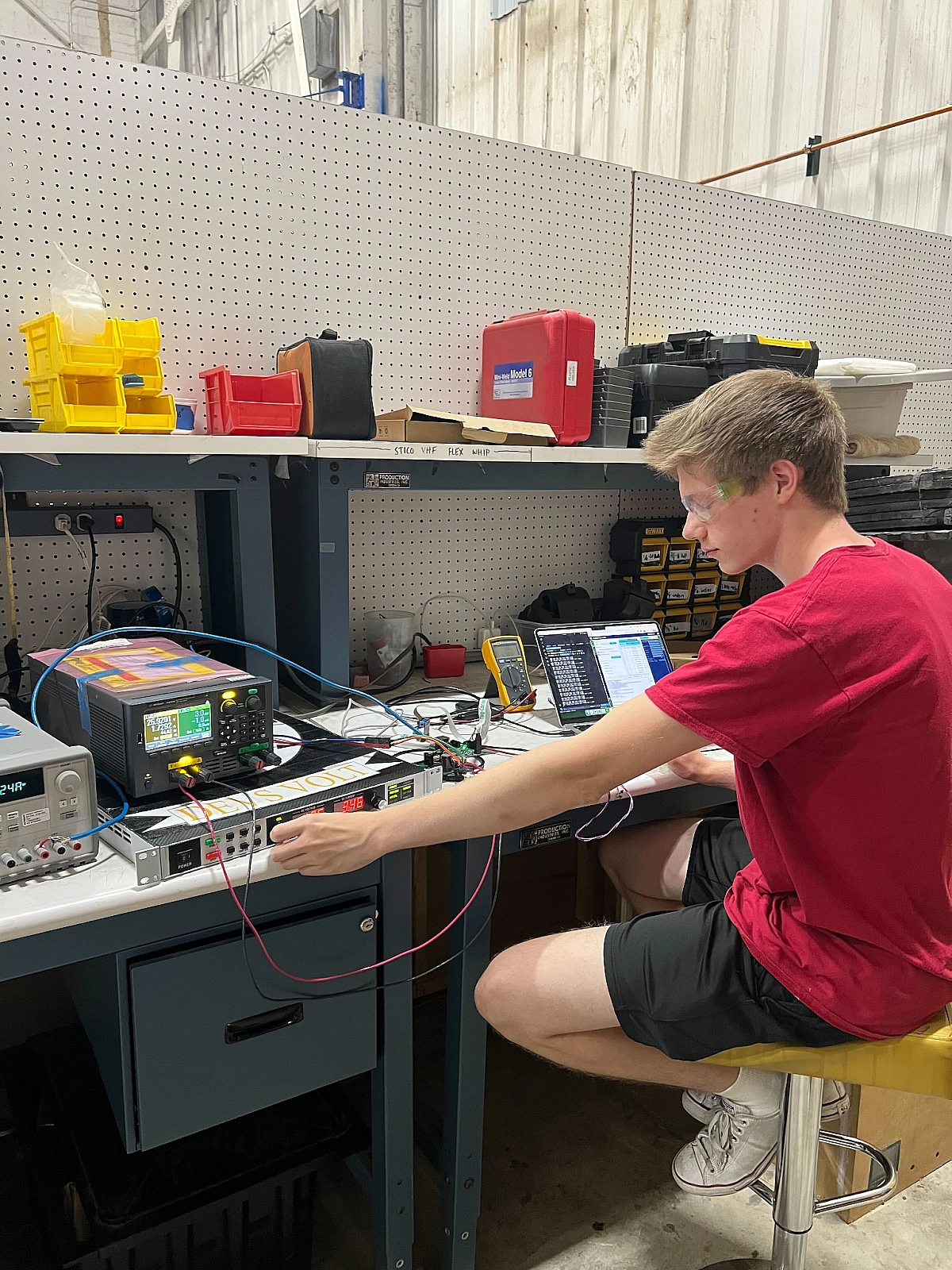
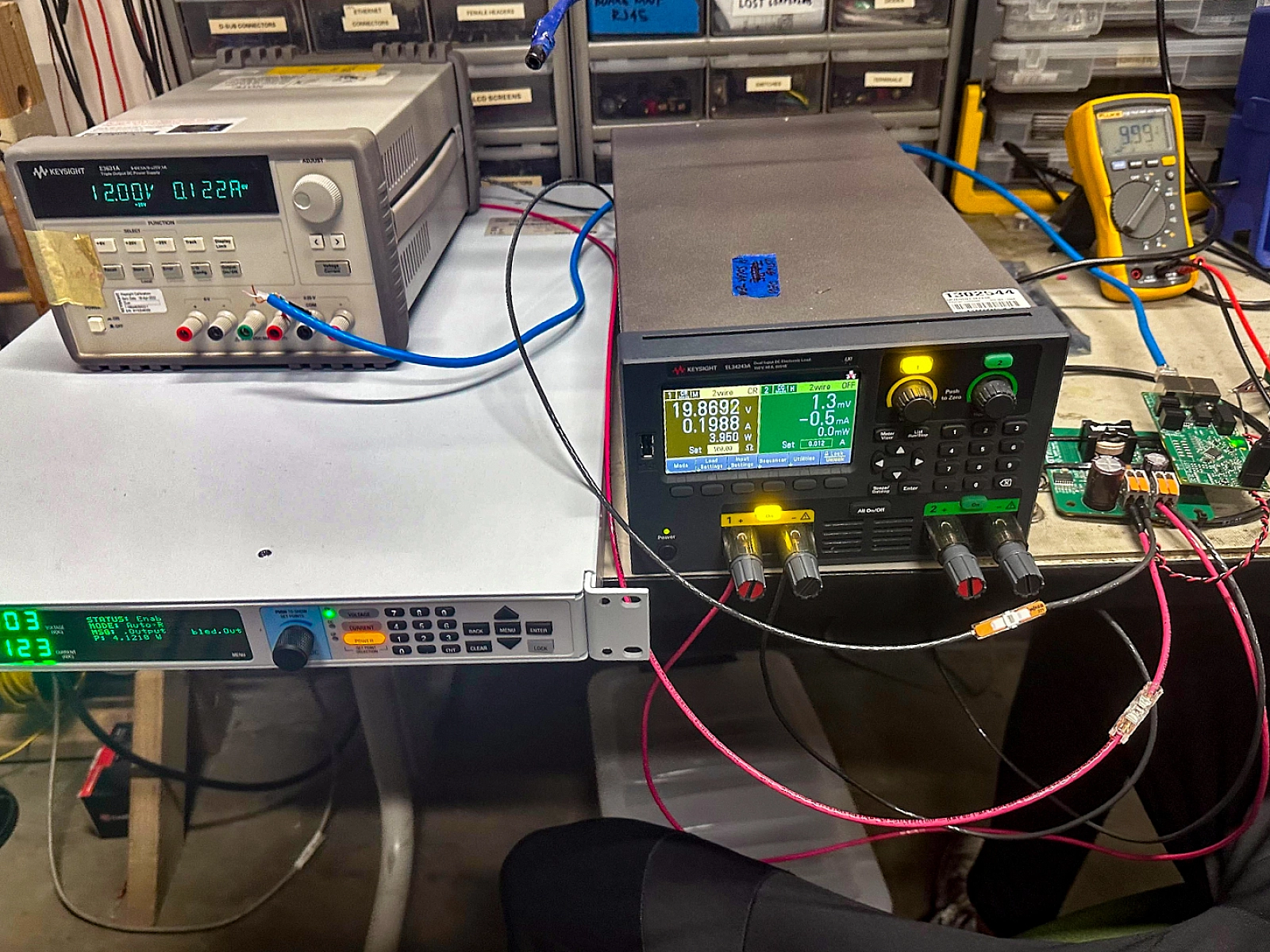
To date, the team has used Magna-Power SL160-9 and SLx1.5-200-7.5/UI+CAN power supplies to test the synchronous boost converter functionality of its custom MPPTs, together with a Keysight E3631A power supply for low voltage and an Keysight EL34243A electronic load, and to charge custom-fabricated battery modules consisting of 64 parallel 18650 lithium-ion cells.
The team is also developing a custom module characterization system that integrates the SLx Series power supply with a Siglent SDL1000X electronic load and a Kvaser Leaf v3 CAN interface to characterize state-of-charge versus open-circuit voltage and internal resistance during a complete charge and discharge cycle.
Maximizing Efficiency with SLx Series Precision
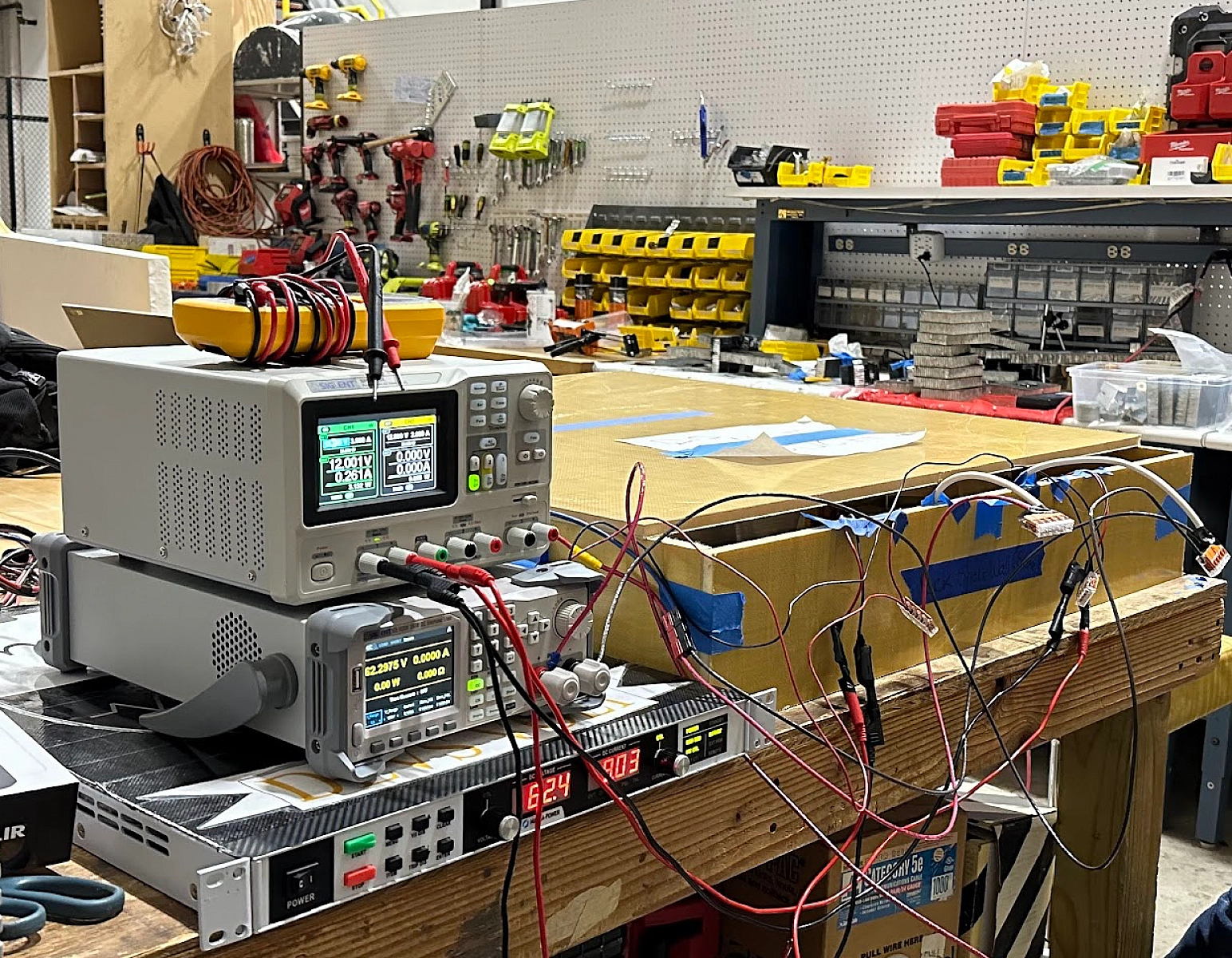
One of the primary goals of our custom MPPT design is to maximize efficiency. To accurately characterize performance, we use the SLx Series power supply’s remote sensing capability to ensure precise measurement of the input voltage and current delivered to the board. For day-to-day testing, the supply is operated in CC/CV modes, providing both flexibility and ease of use. The SLx also offers enhanced display and setpoint functionality, allowing limits to be configured more quickly and making test conditions easier to monitor.
Advanced Automation via CANopen
We will also use the CANopen protocol in the design of a custom characterization system to interface with the SLx supply. A host PC, connected via a Kvaser Leaf to both the electronic load and the Magna Power supply, will enable precise control and monitoring of two key processes:
- Battery pack charging during charge-cycle characterization.
- The voltage across and current through the electronic load during discharge-cycle characterization.
The SLx supply’s robust communication and monitoring capabilities make this characterization workflow both convenient and reliable.
Safety and Best Practices for Student Teams
For other student teams, safety should always be the top priority. The SL Series and SLx Series supplies make it easy to configure overvoltage and overcurrent protection, and we ensure these limits are set before every test to protect both our team and our workshop.
In addition, creating a custom attachment for the Magna-Power supply to provide standardized power and ground connections can greatly streamline testing. By routing these connections to a generic connector, each project can use its own dedicated cable assembly, making it safer and easier to switch between different test setups.
Authors
- Pranjal Chatterjee (GTSR Electrical Division Lead, B.S. Electrical Engineering, 3rd year)
- Hannah Xiao (Former GTSR Solar and MPPT Subteam Lead, M.S. Electrical and Computer Engineering, 1st year)
- Luke Matheny (GTSR Solar and MPPT Subteam Member, M.S. Electrical and Computer Engineering, rising 1st year)